When reaching into a cabinet or putting on a jacket becomes painful, you quickly realize how many daily tasks depend on shoulder motion.
What’s Happening Medically
Shoulder pain may involve rotator-cuff tendons, the bursa, joint stiffness, arthritis, or referred pain from the neck. Gradual loss of motion in several directions can suggest adhesive capsulitis (frozen shoulder), while pain with specific loading may suggest tendon-related problems. A physical examination helps distinguish these issues; imaging is not always necessary. Guided exercise is often a major part of recovery.
How TCM Interprets the Symptom Pattern
TCM may group localized pain under Qi and Blood stagnation or channel obstruction around the shoulder, with Cold or Damp patterns in some cases. Acupuncture-point selection can vary with the most restricted movement and associated neck symptoms. The traditional language guides care but does not replace identifying a tear, capsular restriction, or cervical involvement.
How Acupuncture May Help
Acupuncture may help reduce shoulder discomfort and protective muscle tension while the patient follows an appropriate movement and strengthening plan. Treatment varies depending on whether the main limitation is pain, stiffness, or weakness. Reassessment is important if function does not improve.
How Your TCM Pattern Changes Your Treatment
Acupuncture often addresses the main symptoms, while the broader TCM pattern may change the selection of additional points and whether complementary therapies or Chinese herbs are considered. These are traditional treatment approaches rather than Western medical diagnoses.
Qi and Blood Stagnation — Pain with Reaching or Lifting
Needling commonly targets selected areas around the shoulder and associated neck muscles, with adjustments according to which movements are restricted. The plan works alongside exercises that restore range of motion and strength.
Cold-Damp — Stiffness That Feels Better When Warm
Where stiffness is associated with cold exposure, a TDP lamp or moxibustion may be used for gentle warmth on suitable skin. New injury, pronounced inflammation, or a hot swollen joint should be evaluated rather than warmed.
Liver Qi Stagnation — Shoulder Tension Accompanied by Stress
When symptoms accompany neck tightness, headaches, or stress-related tension, points away from the shoulder may be added. Herbal support would be considered only for the broader pattern, not as a substitute for rehabilitation.
About warming therapies: Moxibustion uses warmth from burning dried mugwort near acupuncture points. A TDP lamp is a therapeutic heat lamp that warms a selected area without burning herbs. Both may temporarily ease muscular stiffness; the choice depends on symptoms, skin condition, and sensation.
The Role of Chinese Herbal Medicine
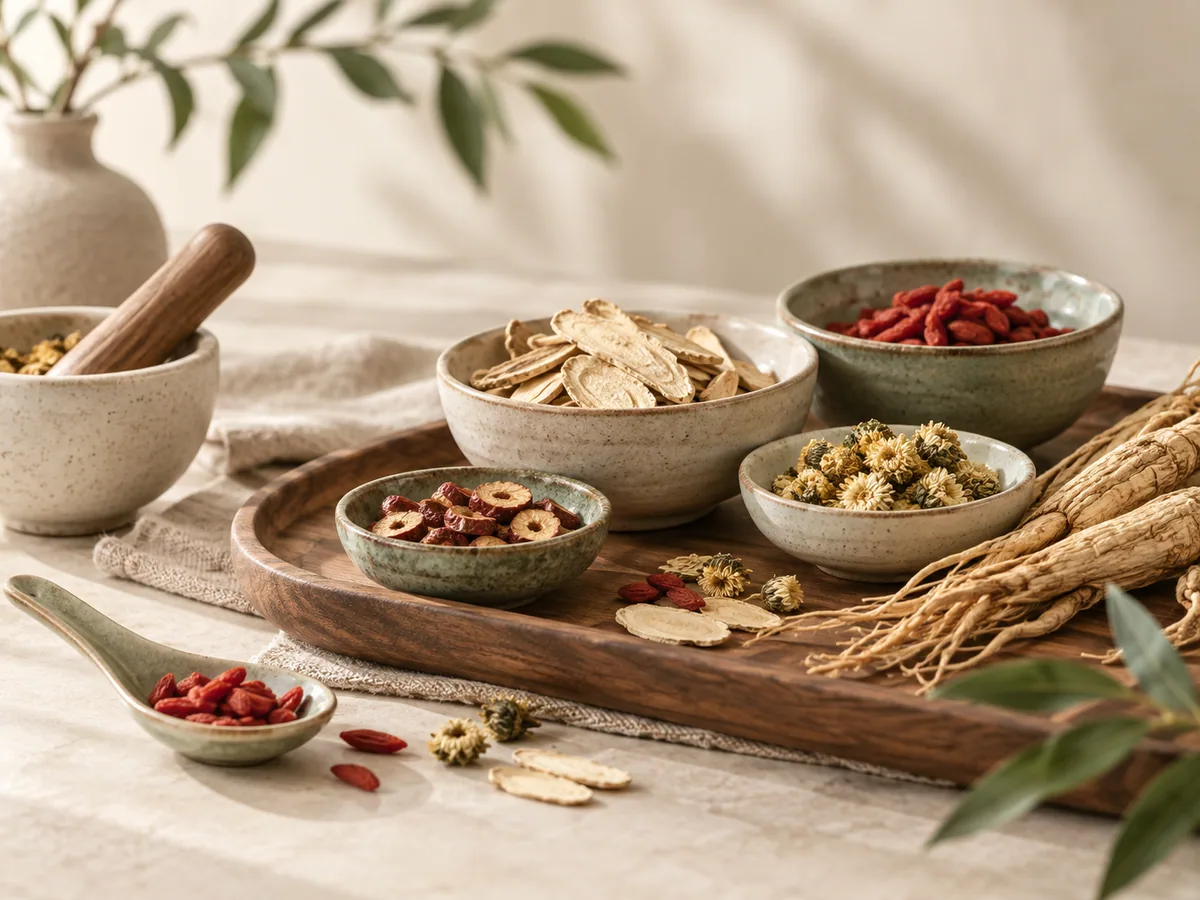
Acupuncture typically focuses on the presenting symptoms, while Chinese herbal formulas, when appropriate, are selected according to the broader TCM pattern, including sleep, digestion, fatigue, and other accompanying symptoms. Herbs are not necessary or suitable for everyone; medication, pregnancy, and cancer-treatment precautions take priority.
What to Expect at Alignment
At Alignment Acupuncture & Wellness, we tailor your acupuncture treatment to your symptoms, medical history, and individual response.
For musculoskeletal pain, acupuncture often focuses on the affected area, while the broader TCM pattern can guide additional points, warming methods, or an optional discussion of Chinese herbal medicine.
When suitable, we may recommend an individualized Chinese herbal formula to complement your acupuncture care. We can order formulas through our clinic. Purchasing Chinese herbal medicine through Alignment incurs an additional charge, which varies depending on the specific formula.
Before suggesting herbs, we review your medications, relevant medical conditions, and potential interactions.
After approximately 2–4 treatments, we can begin evaluating your progress and develop a clearer understanding of what continued treatment may realistically accomplish.
Acupuncture and Chinese herbal medicine, when appropriate, often work best alongside other indicated medical care and healthy daily habits. Results vary from person to person.
When to Seek Medical Care
Seek prompt evaluation after a fall, sudden inability to raise the arm, visible deformity, fever with a hot joint, or progressive arm weakness. Left-shoulder pain with chest pressure, sweating, or breathlessness requires emergency assessment.
A Personalized Approach
Restoring comfortable motion is often the clearest sign of meaningful progress.
Interested in learning whether acupuncture may be appropriate for your symptoms? Schedule a consultation with Alignment Acupuncture & Wellness.
Sources & Further Reading
Medical Disclaimer
The information provided in this article is for educational purposes only and is not intended as medical advice, diagnosis, or a substitute for professional medical care. Every patient’s condition is unique, and treatment recommendations should be based on an individualized evaluation. Always consult a qualified healthcare professional regarding your symptoms or medical concerns. Acupuncture and Chinese herbal medicine are complementary approaches and should not replace necessary medical treatment.