Anxiety can feel like racing thoughts, but it can also feel physical: an unsettled stomach, shallow breathing, restless sleep, or muscles that never seem to relax.
What’s Happening Medically
Anxiety disorders involve ongoing worry or fear that can become difficult to control and interfere with life. A combination of genetics, environment, learned responses, and nervous-system signaling may play a role. Evidence-based care includes cognitive behavioral therapy, other psychotherapies, and medication when appropriate. Medical conditions and medications can also produce anxiety-like symptoms and should be considered.
How TCM Interprets the Symptom Pattern
TCM may describe anxiety through patterns affecting Heart Shen, Liver Qi, or Spleen-related worry, with accompanying sleep or digestive concerns. The language is traditional and does not diagnose generalized anxiety disorder or establish a chemical imbalance. An individualized session considers the person’s broader symptom pattern.
How Acupuncture May Help
Acupuncture may be used as an additional relaxation-focused therapy for people managing anxiety and physical tension. It complements, rather than replaces, treatments such as psychotherapy and indicated medication. Progress can be evaluated through sleep, daily functioning, and physical comfort.
How Your TCM Pattern Changes Your Treatment
Acupuncture often addresses the main symptoms, while the broader TCM pattern may change the selection of additional points and whether complementary therapies or Chinese herbs are considered. These are traditional treatment approaches rather than Western medical diagnoses.
Heart Shen Disturbance — Restlessness and Interrupted Sleep
Point selection may focus on supporting calm and sleep, while established anxiety care such as counseling or medication continues as recommended.
Liver Qi Stagnation — Anxiety with Physical Tension
Where jaw, chest-wall, neck, or shoulder tension accompanies anxiety, acupuncture may address local discomfort and include points traditionally used for the broader pattern.
Spleen-Related Pattern — Rumination and Digestive Discomfort
The practitioner may use a different set of points when worry occurs with low appetite, bloating, or fatigue. Herbal formulas require review for interactions with psychiatric medications and other treatments.
The Role of Chinese Herbal Medicine
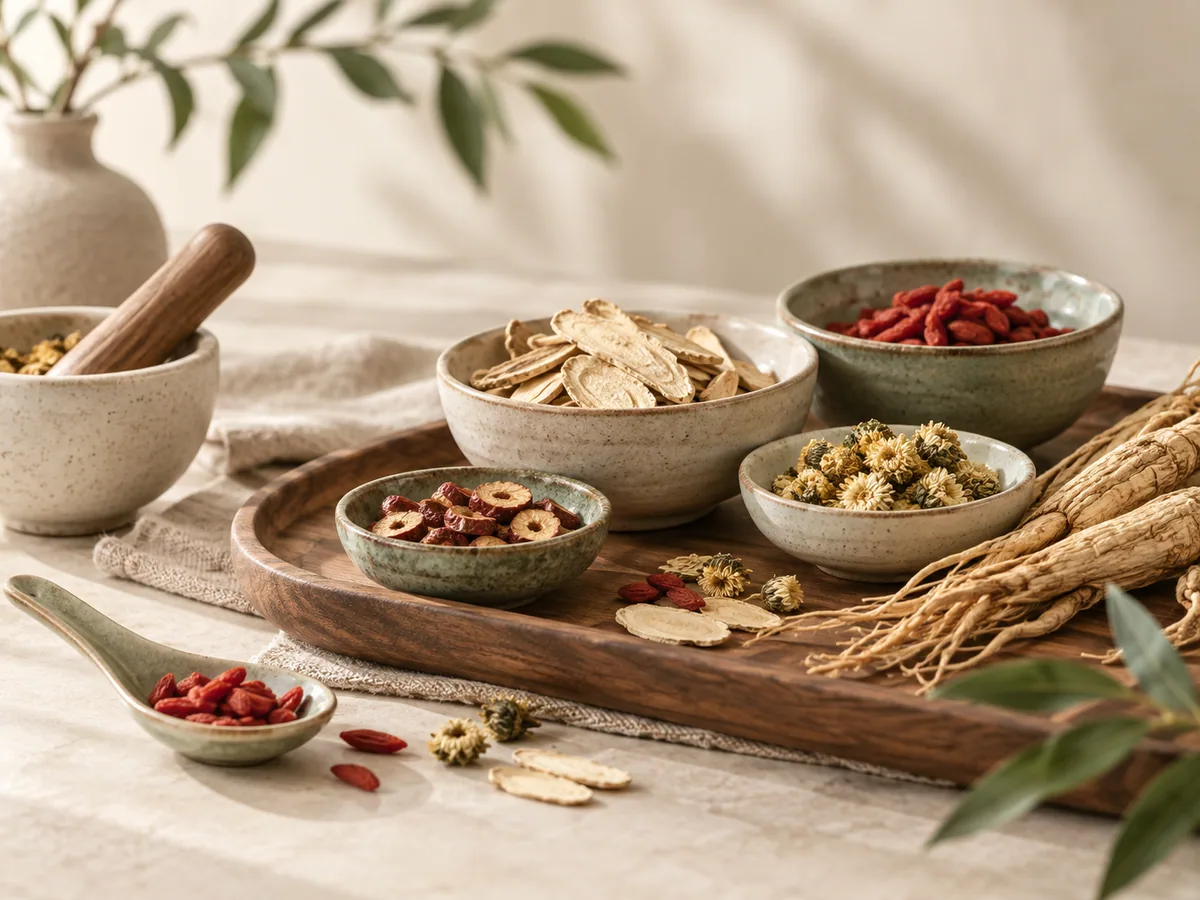
Acupuncture typically focuses on the presenting symptoms, while Chinese herbal formulas, when appropriate, are selected according to the broader TCM pattern, including sleep, digestion, fatigue, and other accompanying symptoms. Herbs are not necessary or suitable for everyone; medication, pregnancy, and cancer-treatment precautions take priority.
What to Expect at Alignment
At Alignment Acupuncture & Wellness, we tailor your acupuncture treatment to your symptoms, medical history, and individual response.
The traditional pattern may influence the choice of additional points and, when appropriate, whether Chinese herbal medicine is discussed. Not every patient needs herbs.
If we recommend a formula, we can order it through our clinic. Purchasing Chinese herbal medicine through Alignment incurs an additional charge, which varies depending on the specific formula.
Before suggesting herbs, we review your medications, relevant medical conditions, and potential interactions.
After approximately 2–4 treatments, we can begin evaluating your progress and develop a clearer understanding of what continued treatment may realistically accomplish.
Acupuncture and Chinese herbal medicine, when appropriate, often work best alongside other indicated medical care and healthy daily habits. Results vary from person to person.
When to Seek Medical Care
Professional assessment is appropriate when worry causes avoidance, recurring panic, difficulty working, or persistent sleep loss. Seek emergency help for chest pain, trouble breathing, or fainting rather than assuming these are anxiety. For suicidal thoughts or a mental-health crisis, call or text 988 in the U.S.
A Personalized Approach
Good anxiety care supports both emotional well-being and physical comfort.
Interested in learning whether acupuncture may be appropriate for your symptoms? Schedule a consultation with Alignment Acupuncture & Wellness.
Sources & Further Reading
Medical Disclaimer
The information provided in this article is for educational purposes only and is not intended as medical advice, diagnosis, or a substitute for professional medical care. Every patient’s condition is unique, and treatment recommendations should be based on an individualized evaluation. Always consult a qualified healthcare professional regarding your symptoms or medical concerns. Acupuncture and Chinese herbal medicine are complementary approaches and should not replace necessary medical treatment.